

The 7 Most Common Beginner Mistakes in Shibari – and How to Avoid Them | TheRopestry
Mistakes are part of learning – especially in Shibari. The good news: most beginner mistakes are easy to avoid once you know them. Some, however, can become uncomfortable or even dangerous if you ignore circulation, nerves or emotional needs.
In this article of our Shibari series we show you the 7 most common pitfalls. You will learn why they happen, what risks they carry, and – most importantly – how you can avoid them from the very beginning. This way your practice becomes safer, more connecting and more sustainable – with high-quality, skin-friendly jute ropes and a respectful approach.
Shibari lives from trust, clear communication and mindfulness. With these tips you build a strong, safe foundation.

Table of Contents
- 1. Mistake #1: Too little negotiation
- 2. Mistake #2: Tying knots too tightly
- 3. Mistake #3: No regular checks
- 4. Mistake #4: Wrong rope choice
- 5. Mistake #5: No or poor aftercare
- 6. Mistake #6: Jumping too quickly to complex ties
- 7. Mistake #7: Ignoring your own limits and body signals
- Bonus mistakes you should also avoid
- Quick checklist for safe Shibari
- FAQ – Shibari Beginner Mistakes
- Conclusion
1. Mistake #1: Too little negotiation
Many beginners jump straight into tying without first clearly discussing what is okay and what is not. This is one of the most dangerous mistakes. Without open negotiation there is no real foundation of consent.
⚠️ Important: Missing negotiation can lead to boundary violations, insecurity or even physical harm – especially when limits, health issues or triggers are unknown.
Tip: Take 15–30 minutes before every session. Discuss hard limits, soft limits, safe words (Red = stop immediately, Yellow = slow down), medical information and aftercare wishes. Feel free to use a structured checklist. The more openly you talk, the deeper and safer your connection becomes.
2. Mistake #2: Tying knots too tightly
Knots and wraps that are too tight are a classic. They restrict blood flow and can compress nerves (especially the radial nerve on the upper arm) – causing numbness, tingling or even lasting damage.
⚠️ Important: “It doesn’t hurt yet” is not a good sign. Nerve problems can develop quietly and gradually.
Tip: Follow the two-finger rule: two fingers should fit between rope and skin. Regularly check colour, temperature and sensation in the extremities. Loosen immediately if needed. With our grippy yet skin-friendly jute ropes (5.5–6 mm) you can control tension much better than with ropes that are too thin, have recoil or are too slippery.
3. Mistake #3: No regular checks
You tie – and then forget to ask how your partner is feeling. This is risky. Changes in circulation or nerve function can develop quickly.
Tip: Check actively every 5–10 minutes: “How does your hand feel? Can you move your fingers? Is it warm or cold?” Let the person test themselves (e.g. make a fist). React immediately to warning signs such as numbness, coldness or “pins and needles”. Better to ask once too often than once too little.
4. Mistake #4: Wrong rope choice
Many start with cheap ropes, climbing ropes or ropes that are too thin, or loosely braided cotton ropes that stretch. This greatly increases the local pressure on nerves and skin. Ropes that are too short force you into unclean, risky wraps.
Tip: Choose natural jute ropes that are 5.5–6 mm thick – ideally chemical-free and optimised for prolonged skin contact. Our KIYOMI and Mitsuki ropes from TheRopestry are made exactly for this: grippy, soft, sustainable and specifically make for prolonged skin contact. They give you better control and are gentle on the skin. The right length (usually 8 m per rope) makes clean, safe techniques much easier.
5. Mistake #5: No or poor aftercare
After the ropes come off, everything is finished – this is a big mistake. The body and especially the nervous system need time to come down. Without aftercare you risk subdrop, insecurity or physical discomfort.
Tip: Plan aftercare already during the negotiation. Offer warmth, water, gentle touch, conversation and cuddling. Also check in the next day how the person is feeling. Good aftercare deepens trust and makes Shibari better in the long run.
6. Mistake #6: Jumping too quickly to complex ties (e.g. early suspension)
Many people want spectacular suspensions right away after watching YouTube tutorials. This is dangerous. Suspension puts massive load on the body and requires solid knowledge of anatomy, rope tension and emergency techniques.
⚠️ Important: Master floor work first! Suspension is advanced level.
Tip: Start with floor ties and simple harnesses. Learn anatomy (nerve pathways, joints). Attend workshops or rope jams. Practise slowly and with feedback. Our stable jute ropes give you the security you need for progress – but only when the basics are solid.
7. Mistake #7: Ignoring your own limits and body signals
Whether you are the rigger or the bottom: if you “push through” even though something feels wrong, you risk injury or emotional strain. Your body sends clear signals – listen to them.
Tip: As the bottom: say immediately if something feels off. As the rigger: respect your own concentration limits. Shibari should connect, not exhaust. Breaks are allowed and important.
Bonus mistakes you should also avoid
- Not taking care of your ropes: Store them dry, oil/wax them regularly and check for wear. Read more on rope care here.
- No emergency preparation: Always have sharp emergency shears within reach. Know how to free someone quickly. Refresh your first-aid knowledge.
- Mixing Shibari with alcohol or drugs: This massively impairs consent, pain perception and reaction time. Never!
Quick checklist for safe Shibari
- Thorough negotiation with limits & safe words done
- High-quality jute ropes (5.5–6 mm, skin-friendly) conditioned
- Emergency shears within reach
- Regular checks (every 5–10 min) performed
- Immediate reaction to warning signs (numbness, cold, tingling)
- Aftercare planned and carried out
- Ropes well maintained and in good condition
FAQ – Shibari Beginner Mistakes
Can you do Shibari without a proper negotiation if you already know each other well?
No. Even in long-term relationships limits or physical conditions can change. A short check-in before every session protects both of you.
How do I recognise that a knot is too tight?
Watch for numbness, tingling, cold sensation or colour changes. The two-finger rule helps. If in doubt: loosen or release immediately.
Is jute rope really the best choice for beginners?
Yes – especially chemical-free, soft and pliable jute ropes like ours from TheRopestry. They offer good grip, are gentle on the skin and sustainable. Avoid ropes that are too thin or synthetic or contain JBO.
How long should a Shibari session last at most?
There is no fixed time – regular checks and breaks are decisive. Many floor-work sessions last 30–90 minutes. With suspension clearly shorter and with more attention.
Do I really need emergency shears?
Absolutely. Good safety shears can save seconds in an emergency – and possibly nerves or more. They should always be within reach.
Conclusion
The best Shibari experiences happen when you learn from other people’s mistakes – not from your own. With clear negotiation, regular checks, the right ropes and good aftercare, Shibari becomes a safe, intense and deeply connecting practice.
Mistakes happen – but with knowledge and mindfulness you minimise the risks enormously. Your body and your partner will thank you.
Ready for safe and beautiful Shibari?
Discover our premium jute ropes in the shop now – chemical-free, skin-friendly and perfect for beginners and advanced practitioners. Stay mindful, stay connected – and enjoy the ropes responsibly.
Here’s what to read next:
- Consent, Safewords & Check-ins – A Practical Guide for Beginners
- The 7 Most Important Safety Rules for Shibari Beginners
Your TheRopestry Team
Recommended Shibari Products:

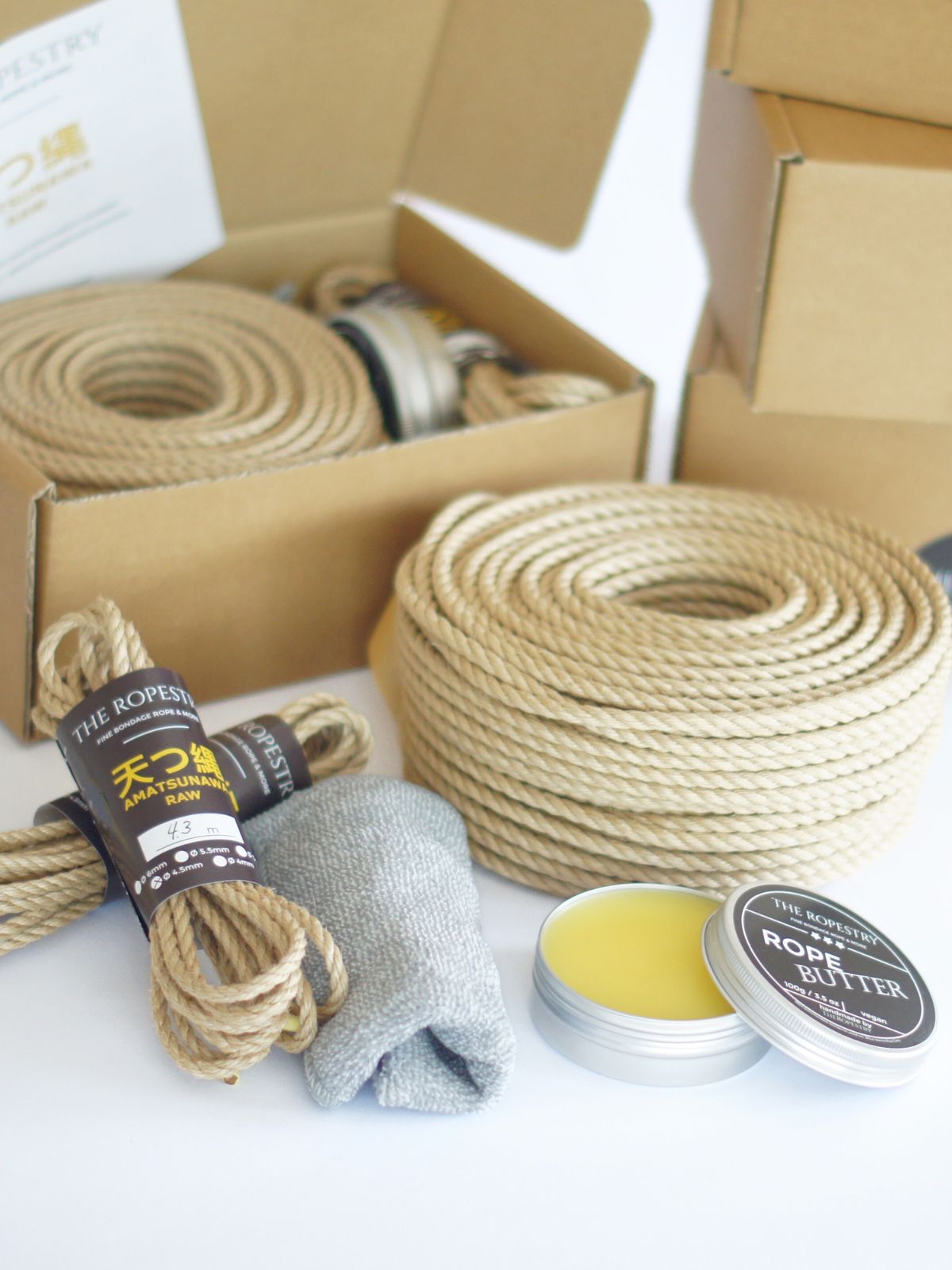
Introducing DIY RAW BOX: The ultimate jute rope conditioning box with a 50 m roll of awesome AMATSUNAWA RAW rope, rope butter and lots, lots more! Are you ready to create your individual rope bondage set with our wonderful JBO-free AMATSUNAWA jute rope? Look no further than our AMATSUNAWA RAW rope — an outstanding and exquisite choice for your sensual and creative bondage projects. Our DIY RAW BOX contains:Three Diameters: Each box includes one 50-meter roll of our popular AMATSUNAWA RAW rope. But that’s not all! The rolls come in three different diameters, allowing you to choose the diameter that suits your rope needs the most.Choose from the following diameters: 6 mm 5.5 mm 5 mm Freedom to Cut & Knot: The DIY RAW ROLL empowers you to cut your ropes directly from the roll, tailoring them to your desired length. Knot the ends, experiment with different knot types or colourful whippings, just let your imagination run wild. Hold Wrists or Ankles in Place: We also include two pieces of thin 4.3 m long jute ropes to attach wrists or ankles quickly. Here you can choose from two diameters: 4.5 mm 4 mmFinest Vegan Rope Care Butter: Right next to the ropes you will find a full 100 g / 3.5 oz plastic pot (NEW!) of our awesome vegan rope butter essential to DIY condition your ropes. Our rope butter is made from Jojoba oil and Mokurō wax and gives your ropes a subtle shine without making them greasy.FREE COMPLIMENTARY Microfiber Cleaning Cloth: A practical tool that wipes away flaming dust or dirt effortlessly! We roll it up neatly and add it to your box!Robust Storage Box: Our practical storage box not only keeps your rope organized but also safe from dirt, dust and direct sunlight. Brochure with Easy-To-Follow instructions: Our box comes also with a delightful surprise. Inside, you’ll find a small, informative brochure with step-by-step instructions for conditioning your ropes. Whether you’re a seasoned Shibari master or a curious beginner, these tips will ensure your ropes stay in top shape.Illustrated Inspiration: Flip through the brochure to discover illustrated guides for creating a crown knot and other nifty tricks. We believe that caring for your ropes is an art in itself, and we’re here to guide you every step of the way.Ready to Unleash Your Rope Skills? If you haven’t experienced our AMATSUNAWA rope yet, now’s the perfect time. Dive into a world of natural premium jute, impeccable quality, and endless possibilities. Explore our rope sets, butter and accessories and let your imagination soar! Find out more about our AMATSUNAWA rope here: AMATSUNAWA created this luxury Asanawa to provide you with the perfect tool for your tying pleasure. Sourcing premium quality Tossa jute batched using soybean oil and twisted with a technique to significantly reduce hair and fibre loss into a single–ply yarn. The yarn is food-grade and specifically developed for prolonged skin contact. Yarns are wound for softness and stability by our Japanese partner to produce a superior rope.JBO-FREE - SKIN-FRIENDLY - BIODEGRADABLE Materials used:Jute yarn: 100% corchorus olitorius TossaBatching oil: Soybean oil Japanese production. Product ships from Germany. Important information about the product: Yarn spools are not infinitely long. Each spool of yarn has a beginning and an end, representing joins in the rope made with a reef knot. We recommend customers to remove these knots if possible. Further detailed product safety and usage guidelines for our products can be found here.
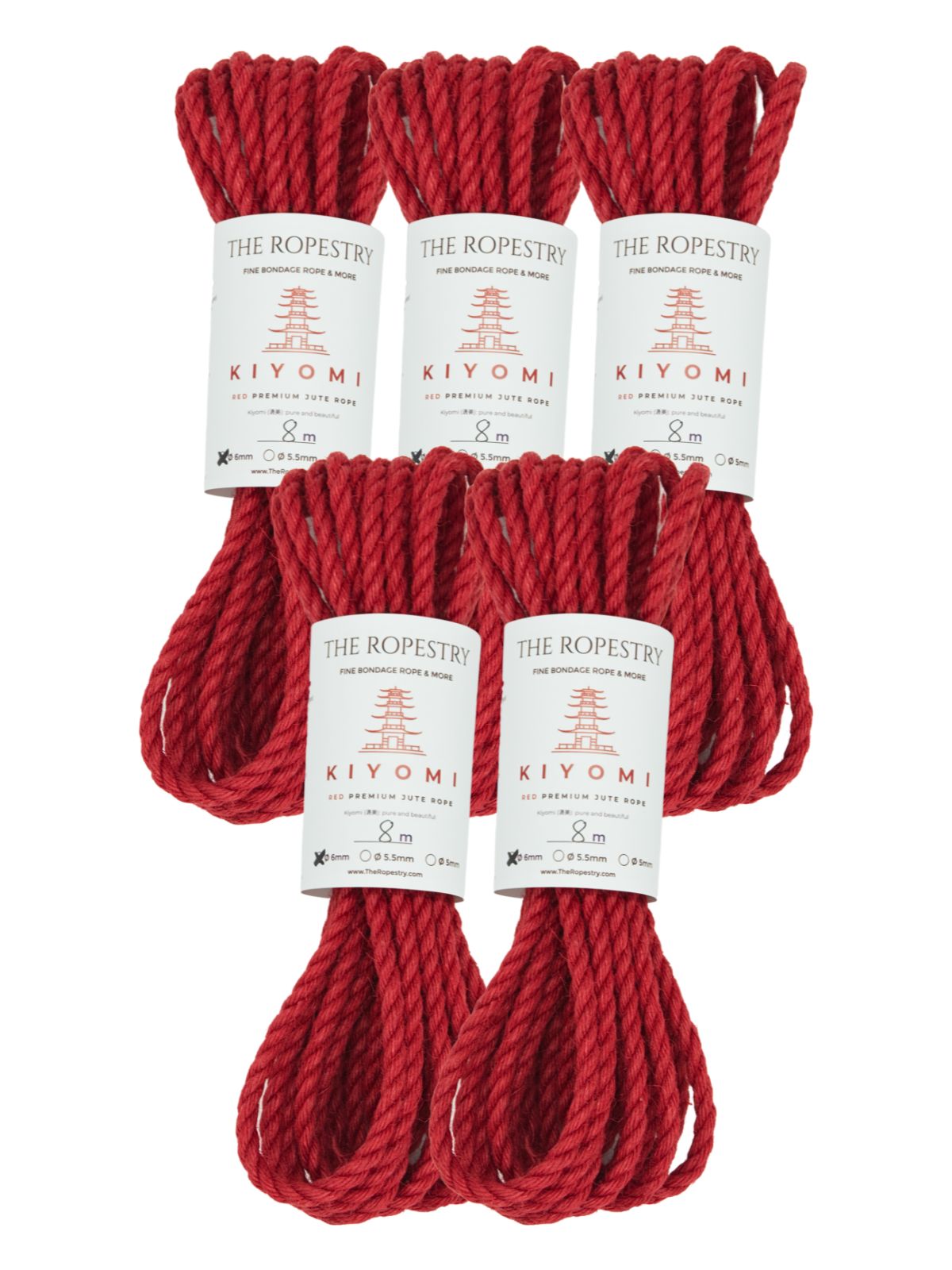
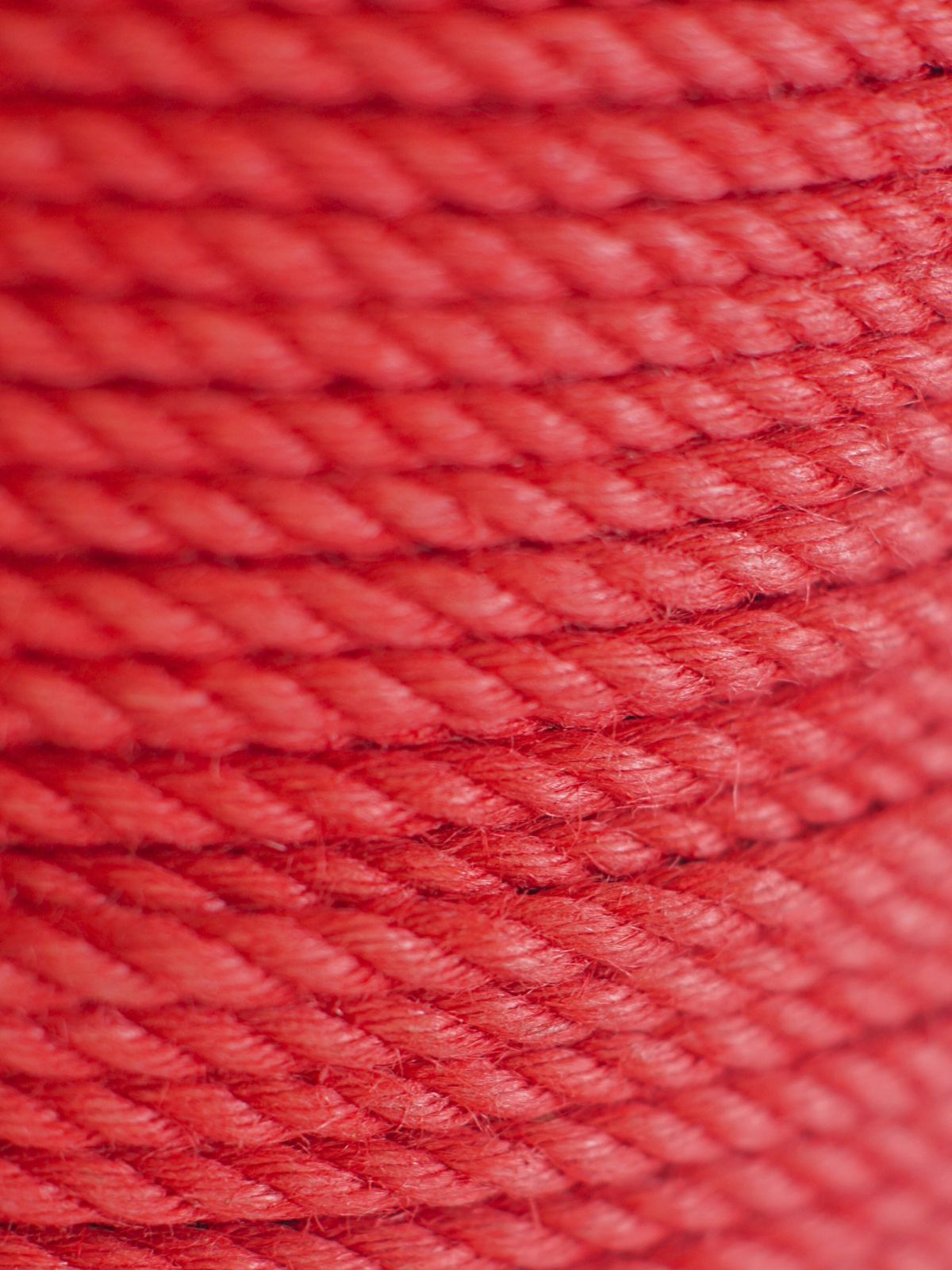
KIYOMI RED – Premium Red Jute Rope for Shibari & Kinbaku Add a bold splash of colour to your rope sessions with KIYOMI RED – a strong, flexible, pre-dyed red jute rope made for both floor work and suspension work. Crafted from 100% Tossa Grade 1 jute, this rope combines durability, softness, and vibrant aesthetics for all your Shibari and Kinbaku needs. Vibrant, Strong & Up For The TaskKIYOMI RED is a medium-lay, Z-twist, 3-strand rope made from a stable single-ply jute yarn. It’s pre-dyed before twisting, which ensures full colour penetration and structural stability. The rope has reduced fibre loss thanks to a special yarn treatment – keeping your play space cleaner. With a certified breaking load of 228 daN (tested on a 6 mm sample), this rope is strong enough for both floor work and suspension work. How It Compares to the Golden KIYOMI RopeUnlike the golden version, KIYOMI RED has a slightly loosened twist. This adjustment was made to balance the firmer feel caused by the dyeing process. The result? A rope that’s slightly thicker, softer, and more supple – perfect for those who love a strong rope with flexibility. Natural, Sustainable & Safe Made from 100% natural pre-dyed juteBiodegradable and eco-friendlyMineral oil-freePleasant natural scentRich, deep red colour Conditioning Made EasyLike all natural jute ropes, KIYOMI RED needs initial conditioning. But don’t worry – we include step-by-step instructions with every order. For best results, we recommend our vegan rope butter, which enhances colour depth and gives the rope a subtle sheen. To fully condition the rope, the following additional tools and materials are recommended: Scissors (for cutting the rope)Masking tape (optional, to secure the rope ends)Rope butter (vegan or traditional)Tumble dryerGas burner with cartridgeSoft, lint-free microfiber clothA small amount of Jojoba oil (optional) Custom Knots & Extra LengthEach rope comes with taped ends so you can tie your own knots and add colourful markings. We even include an extra 30 cm of rope for this purpose – so a 4 m rope is actually 4.30 m long.High-Quality Yarn, Low Fibre LossWe use a specially treated yarn that minimizes wear and abrasion. This means your play space stays cleaner and your rope lasts longer – even with frequent use.Experience KIYOMI RED NowWhether you're a beginner or a seasoned rigger, KIYOMI RED is a reliable, beautiful, and sustainable choice for your Shibari rope collection.JBO-FREE - SKIN-FRIENDLY - BIODEGRADABLEMaterials used:Jute yarn: 100% corchorus olitorius Tossa, Grade 1, pre-dyedBatching oil: Soybean oil Product ships from Germany. Important information about the product: Yarn spools are not infinitely long. Each spool of yarn has a beginning and an end, representing joins in the rope made with a reef knot. We recommend customers to remove these knots if possible. Colour transfer to clothing, skin, or furniture may occour due to the nature of the product. Further detailed product safety and usage guidelines for our products can be found here.


50g/1.75oz scented vegan rope butter for the ongoing care and conditioning of jute ropes for bondage, Shibari, and Kinbaku in various scents. We offer the following scents: VanillaChocolateJasmineMuskStrawberry This rope butter is handcrafted for you according to a recipe we developed ourselves and tested extensively. It is a balanced blend of Jojoba oil and Mokurō wax, refined with high-quality perfume oils. Compared to the traditional rope butter with beeswax, the vegan rope butter gives your rope significantly more shine than the butter with beeswax, whose finish is fairly matte. After flaming the ropes, the scent of the rope butter is only minimally noticeable. Once the flaming odour has dissipated, the scent of the butter becomes more prominent again. It comes in a solid aluminum tin that contains a generous 50g / 1.75 oz of rope butter. You will also receive a booklet with tested instructions on how to apply this butter during the conditioning process to your ropes. So, you have easy-to-follow step by step instructions to achieve the best possible results and end up with amazing ropes. The feel of a rope is crucial. Conditioning also improves the handling of the rope, reduces wear, and tends to reduce fibre loss. It also gives a lovely patina to the rope. The rope butter can be worked into a rope whenever needed e.g. after extensive use, or if it becomes dry. Dosage: For conditioning an 8m rope, we recommend using approximately 3g of butter (about a hazelnut-sized amount). 50g of rope butter is therefore sufficient to condition at least 15 pieces of 8m jute rope. Care well for your ropes and enjoy them for longer! Ingredients: Jojoba oil, Mokurō wax, perfume Further detailed product safety and usage guidelines for our products can be found here.


Our high-quality rope oil for jute ropes is ideal for the regular care, conditioning, and long-term preservation of natural fiber ropes. Frequent use or environmental influences can cause jute ropes to dry out and lose their suppleness. This rope oil helps nourish the natural fibers, smooth the surface, and restore a pleasant, well-balanced handling. Why Rope Care Matters Regular rope care does more than improve the feel—it also: maintains flexibilityreduces fiber abrasion and wearprotects the rope from drying outextends the lifespan of jute ropescreates an even, natural patina This keeps the rope functional, visually appealing, and reliably ready for use over time. How to Use the Rope Oil Application is simple and effective: Apply a small amount of rope oil to a lint-free clothPull the rope completely through the clothRepeat the process in the opposite direction Depending on usage and the condition of the rope, the application can be repeated as needed. Proper rope care is not an optional extra — it is an essential part of preserving the quality and reliability of your rope. With our rope oil, jute ropes remain supple, durable, and well cared for, ensuring consistently high quality over time.Care well for your ropes and enjoy them for longer!Contents: Bottle containing 100 ml /3.3oz of pure jojoba oil.Detailed product saftey and usage guidelines for our products can be found here.